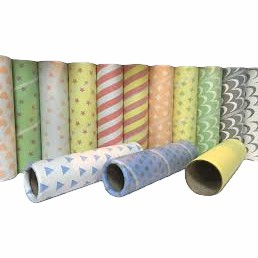

In the textile industry, the choice of materials and components can significantly impact the quality, efficiency, and cost - effectiveness of production. One such component that often goes unnoticed but plays a crucial role is the POY wrapped paper core. As a supplier of POY Wrapped Paper Cores, I have witnessed firsthand the potential and versatility of these products in the textile sector. In this blog, we will explore whether POY wrapped paper cores can be used in the textile industry and how they can bring value to textile manufacturers.
Understanding POY Wrapped Paper Cores
POY, or Partially Oriented Yarn, is a type of synthetic yarn that is commonly used in the textile industry. POY wrapped paper cores are specifically designed to hold POY yarn during the manufacturing, storage, and transportation processes. These paper cores are made from high - quality paper materials, which are often wrapped with additional layers to enhance their strength and durability.
The construction of POY wrapped paper cores typically involves multiple layers of paper that are glued together. The outer layer may be treated to provide a smooth surface, which is essential for the proper winding and unwinding of the POY yarn. The cores come in various sizes and specifications to meet the different requirements of textile manufacturers.
Advantages of Using POY Wrapped Paper Cores in the Textile Industry
1. Cost - effectiveness
One of the primary advantages of using POY wrapped paper cores is their cost - effectiveness. Compared to other types of cores, such as plastic or metal cores, paper cores are generally more affordable. This is especially important for textile manufacturers who are looking to reduce their production costs without sacrificing quality. Paper cores can be produced in large quantities at a relatively low cost, making them an attractive option for both small and large - scale textile operations.
2. Lightweight and Easy to Handle
POY wrapped paper cores are lightweight, which makes them easy to handle during the manufacturing process. Textile workers can easily move and position the cores, reducing the risk of injury and improving overall productivity. Additionally, the lightweight nature of paper cores also reduces transportation costs, as they require less energy to move compared to heavier cores.
3. Environmental Friendliness
In today's environmentally conscious world, the textile industry is increasingly looking for sustainable solutions. POY wrapped paper cores are a more environmentally friendly option compared to plastic or metal cores. Paper is a renewable resource, and it can be recycled after use. By using paper cores, textile manufacturers can reduce their carbon footprint and contribute to a more sustainable future.
4. Compatibility with Textile Machinery
POY wrapped paper cores are designed to be compatible with a wide range of textile machinery. They can be easily loaded onto spinning machines, winding machines, and other equipment used in the textile production process. The smooth surface of the paper cores ensures that the POY yarn can be wound and unwound without any issues, resulting in a more efficient production process.
Applications of POY Wrapped Paper Cores in the Textile Industry
1. Spinning Process
During the spinning process, POY wrapped paper cores are used to hold the POY yarn as it is being spun. The cores provide a stable base for the yarn, ensuring that it is wound evenly and without any tangles. This is crucial for producing high - quality yarn with consistent properties.


2. Winding and Packaging
After the spinning process, the POY yarn is wound onto the paper cores for storage and transportation. The paper cores protect the yarn from damage and ensure that it remains in good condition until it reaches the end - user. Additionally, the cores can be easily labeled and packaged, making it easier for textile manufacturers to manage their inventory.
3. Weaving and Knitting
POY wrapped paper cores are also used in the weaving and knitting processes. The yarn can be unwound from the cores and fed directly into the weaving or knitting machines. The smooth surface of the paper cores ensures that the yarn flows smoothly, resulting in a more efficient and high - quality production process.
Comparison with Other Types of Cores
1. Plastic Cores
Plastic cores are another common option in the textile industry. While plastic cores are durable and can be reused multiple times, they are more expensive than paper cores. Additionally, plastic is not as environmentally friendly as paper, as it takes a long time to decompose. POY wrapped paper cores offer a more cost - effective and sustainable alternative to plastic cores.
2. Metal Cores
Metal cores are known for their strength and durability. However, they are heavy and expensive, which can increase transportation costs and make them difficult to handle. Paper cores, on the other hand, are lightweight and more affordable, making them a more practical choice for many textile manufacturers.
Case Studies
To illustrate the effectiveness of POY wrapped paper cores in the textile industry, let's look at a few case studies.
Case Study 1: A Small - Scale Textile Manufacturer
A small - scale textile manufacturer was looking for a cost - effective solution to hold their POY yarn. They decided to switch from plastic cores to POY wrapped paper cores. As a result, they were able to reduce their production costs by 20% without sacrificing the quality of their yarn. The lightweight nature of the paper cores also made it easier for their workers to handle the yarn, improving overall productivity.
Case Study 2: A Large - Scale Textile Mill
A large - scale textile mill was concerned about their environmental impact. They decided to use POY wrapped paper cores to reduce their carbon footprint. By using paper cores, they were able to recycle a significant amount of waste paper, contributing to a more sustainable production process. Additionally, the paper cores were compatible with their existing machinery, ensuring a smooth transition.
Conclusion
In conclusion, POY wrapped paper cores can indeed be used in the textile industry, and they offer several advantages over other types of cores. They are cost - effective, lightweight, environmentally friendly, and compatible with a wide range of textile machinery. Whether you are a small - scale textile manufacturer or a large - scale textile mill, POY wrapped paper cores can help you improve your production efficiency, reduce costs, and contribute to a more sustainable future.
If you are interested in learning more about our POY Wrapped Paper Cores or would like to discuss a potential purchase, please feel free to reach out. We are committed to providing high - quality products and excellent customer service. You can also explore our other related products, such as POY Textile Tube, FDY Paper Tube, and DTY Twisted Yarn Paper Tube.
References
- Textile Industry Handbook: A Comprehensive Guide to Textile Manufacturing Processes
- Environmental Impact Studies in the Textile Sector
- Case Studies on the Use of Paper Cores in the Textile Industry