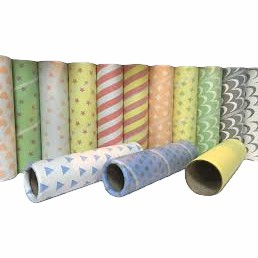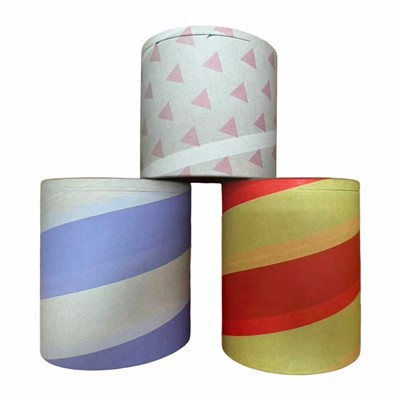

As a supplier of Precise Concentricity Paper Tubes, I am often asked about the shear strength of these products. Shear strength is a crucial mechanical property that determines how well a paper tube can withstand forces that act parallel to its cross - section. In this blog, we will delve into the concept of shear strength, its significance for Precise Concentricity Paper Tubes, and the factors that influence it.
Understanding Shear Strength
Shear strength is defined as the maximum amount of shear stress that a material can withstand before it fails or deforms. In the context of paper tubes, shear stress occurs when a force is applied parallel to the tube's cross - sectional area. For example, when a paper tube is used in a winding application and the winding process exerts a sideways force on the tube, the tube experiences shear stress.
The shear strength of a paper tube is typically measured in units of force per unit area, such as pounds per square inch (psi) or pascals (Pa). A higher shear strength indicates that the tube can better resist the forces that act parallel to its cross - section, making it more suitable for applications where such forces are present.
Importance of Shear Strength for Precise Concentricity Paper Tubes
Precise Concentricity Paper Tubes are widely used in various industries, including the textile, chemical fiber, and packaging industries. In these applications, the tubes need to maintain their shape and integrity under different loading conditions.
In the textile industry, for instance, paper tubes are used as cores for winding yarns. During the winding process, the yarn exerts a significant amount of force on the tube. If the shear strength of the tube is insufficient, it may deform or collapse, leading to poor winding quality and potential production issues.
Similarly, in the chemical fiber industry, POY Paper Tubes are used for winding polyester yarns. These tubes need to withstand the tension and shear forces generated during the winding and unwinding processes. A tube with high shear strength ensures that the yarn is wound evenly and that the tube remains intact throughout the production cycle.
Factors Affecting the Shear Strength of Precise Concentricity Paper Tubes
Several factors can influence the shear strength of Precise Concentricity Paper Tubes. These include:
1. Paper Quality
The quality of the paper used to manufacture the tube is one of the most important factors. High - quality paper with good fiber strength and bonding properties will result in a tube with higher shear strength. Papers with longer fibers and better fiber - to - fiber bonding are more resistant to shear stress.
2. Tube Wall Thickness
The thickness of the tube wall also plays a significant role in determining its shear strength. Generally, thicker walls provide more resistance to shear forces. However, increasing the wall thickness may also increase the weight and cost of the tube. Therefore, a balance needs to be struck between shear strength and other factors such as weight and cost.
3. Manufacturing Process
The manufacturing process of the paper tube can have a significant impact on its shear strength. For example, the way the paper is wound around the mandrel and the type of adhesive used can affect the tube's internal structure and bonding. A well - manufactured tube with proper winding and bonding will have higher shear strength.
4. Tube Design
The design of the tube, including its diameter and length, can also influence its shear strength. In general, tubes with larger diameters and shorter lengths tend to have higher shear strength. This is because the larger cross - sectional area provides more resistance to shear forces, and the shorter length reduces the likelihood of buckling.
Measuring the Shear Strength of Precise Concentricity Paper Tubes
There are several methods for measuring the shear strength of paper tubes. One common method is the torsion test, where a tube is subjected to a twisting force. The torque required to cause failure is measured, and the shear strength can be calculated based on the dimensions of the tube and the applied torque.
Another method is the shear test, where a tube is placed between two parallel plates, and a force is applied parallel to the tube's cross - section. The maximum force that the tube can withstand before failure is recorded, and the shear strength is calculated.
Applications of High - Shear - Strength Precise Concentricity Paper Tubes
Precise Concentricity Paper Tubes with high shear strength are suitable for a wide range of applications.
In the packaging industry, High Strength Composite Paper Tubes are used for packaging heavy or bulky items. These tubes can withstand the shear forces generated during handling and transportation, ensuring that the contents are protected.
In the industrial sector, Thin Walled Pressure - resistant Paper Tubes are used in applications where space is limited, and high shear strength is required. For example, they can be used as cores for winding electrical cables or as structural components in machinery.
Conclusion
The shear strength of Precise Concentricity Paper Tubes is a critical property that determines their performance in various applications. By understanding the factors that affect shear strength and using appropriate manufacturing processes and materials, we can produce paper tubes with high shear strength that meet the needs of our customers.
If you are in the market for Precise Concentricity Paper Tubes and are interested in discussing your specific requirements, we invite you to reach out to us for a detailed consultation. Our team of experts is ready to assist you in selecting the right paper tubes for your application.


References
- ASTM D2344/D2344M - 16e1, Standard Test Method for Short - Beam Strength of Polymer Matrix Composite Materials and Their Laminates.
- TAPPI T818 om - 16, Shear Strength of Paperboard by the V - Notch Method.